Beyond Control: Slime Mould in Graphic Design

Beyond Control
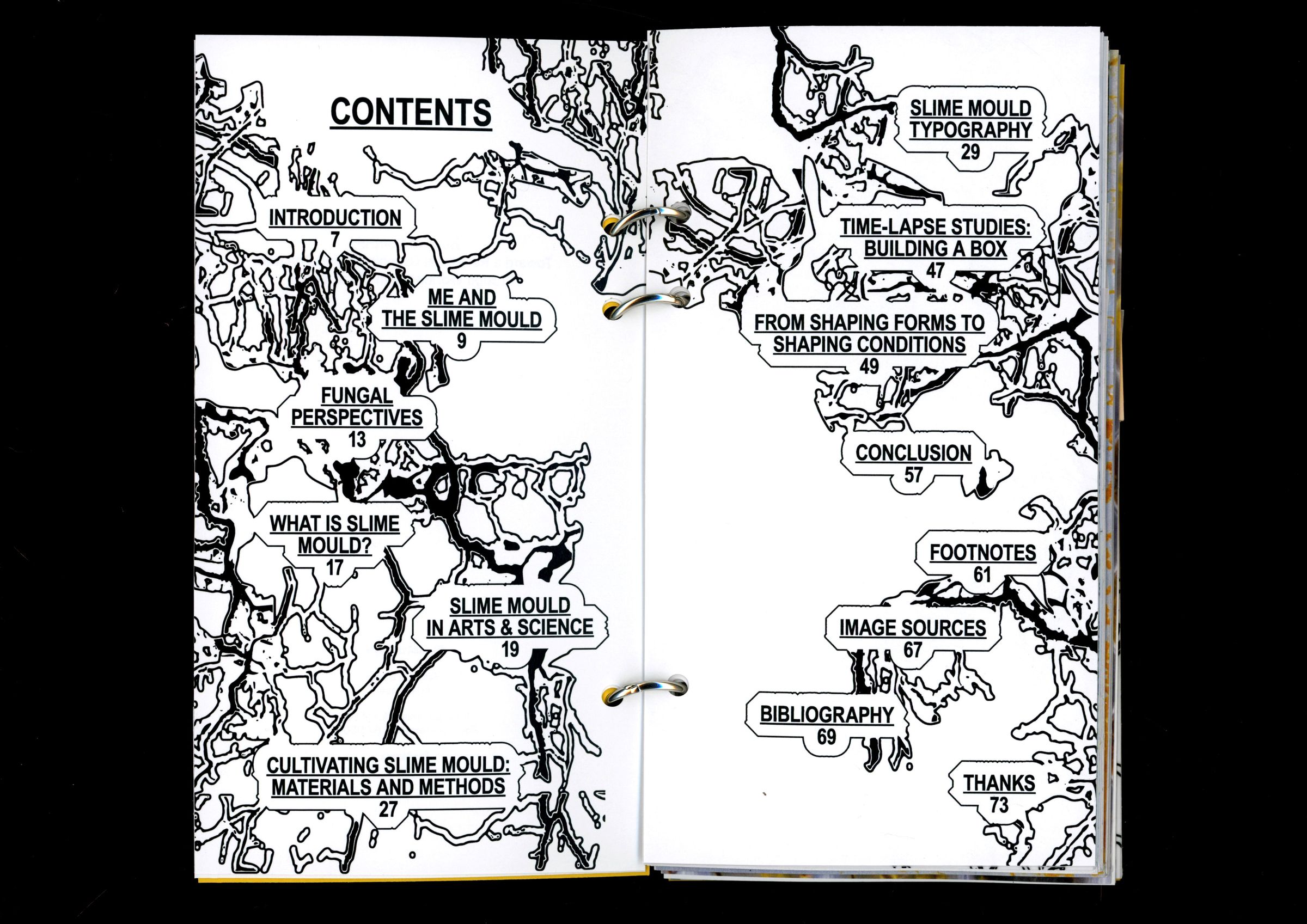
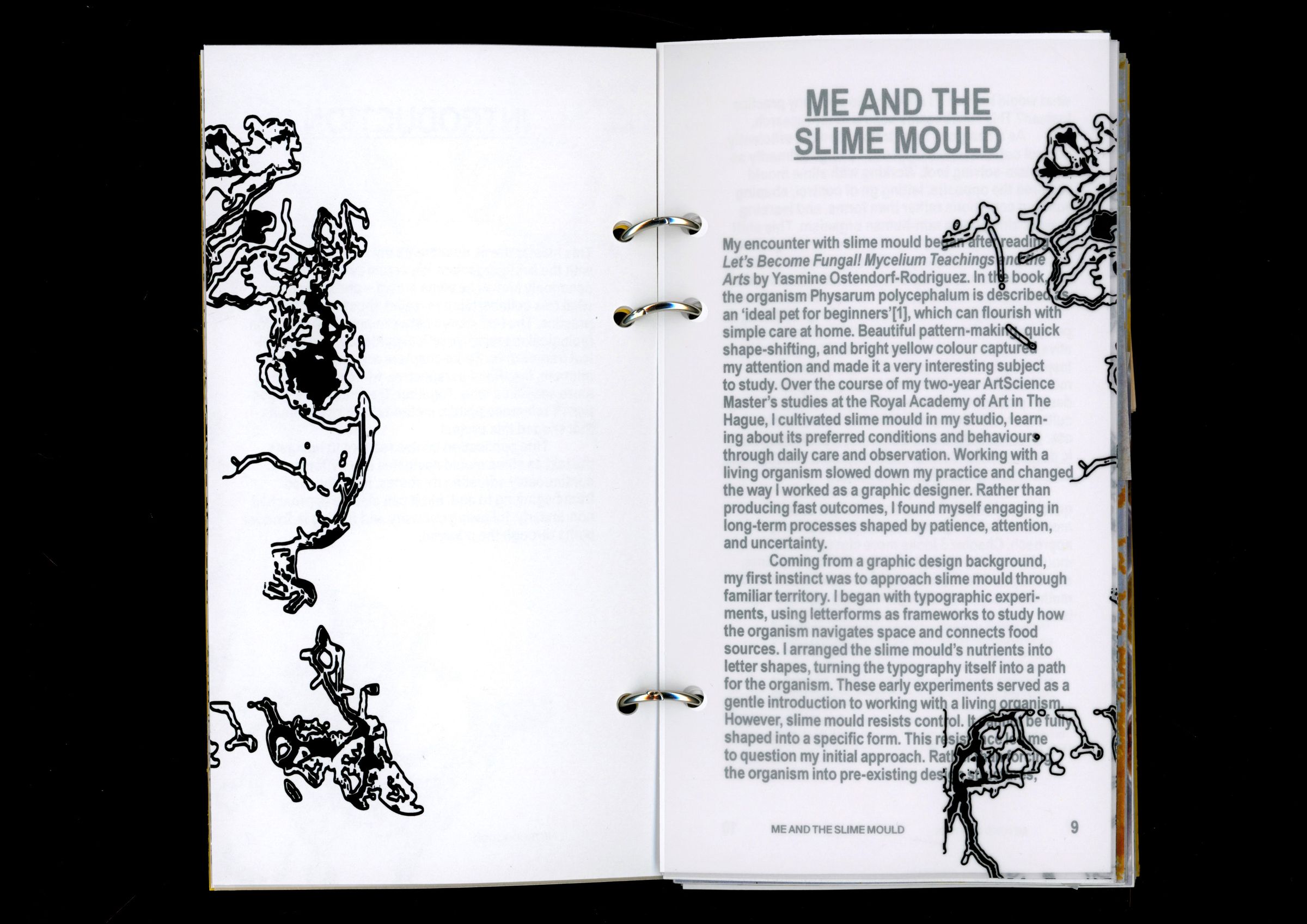
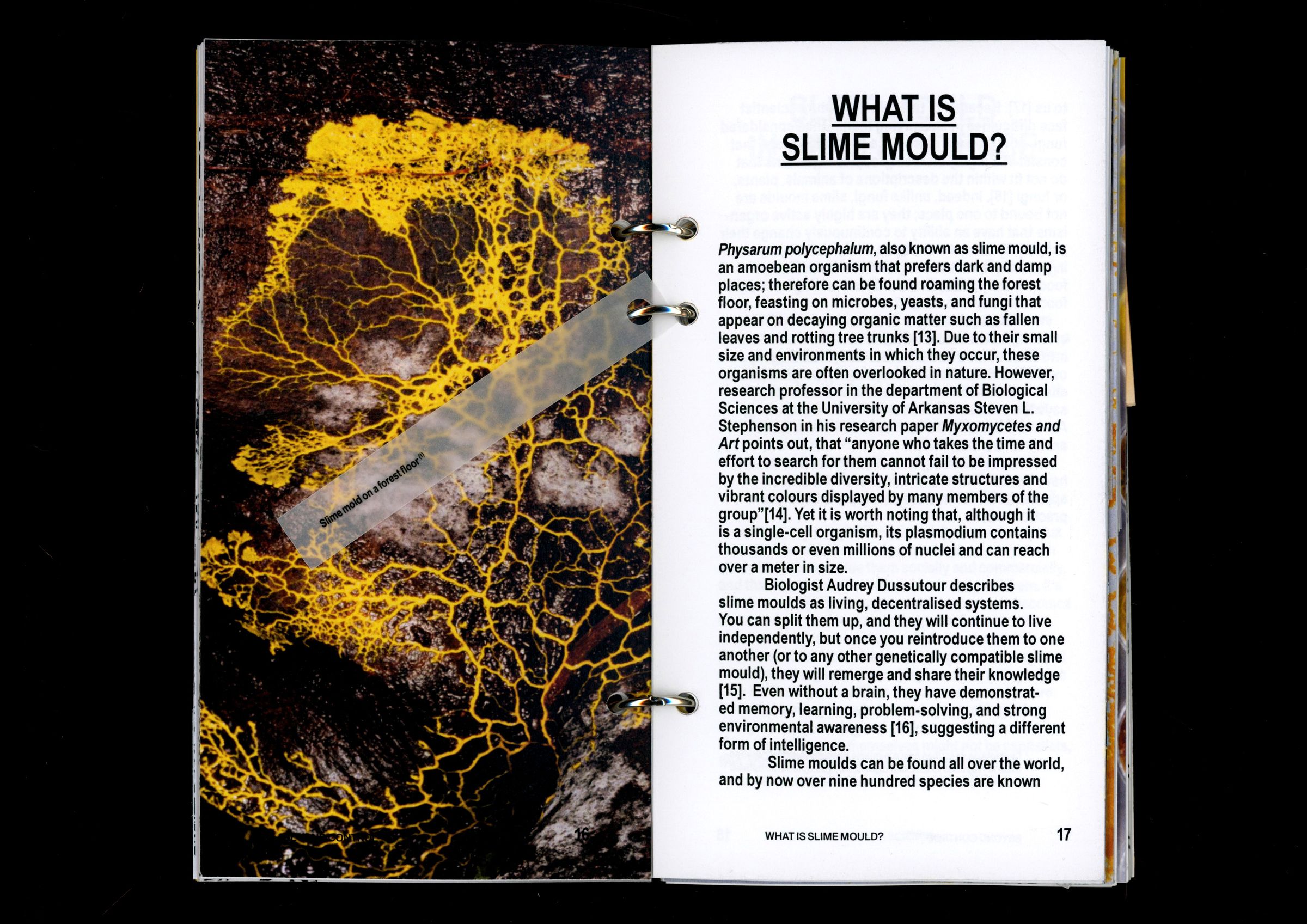
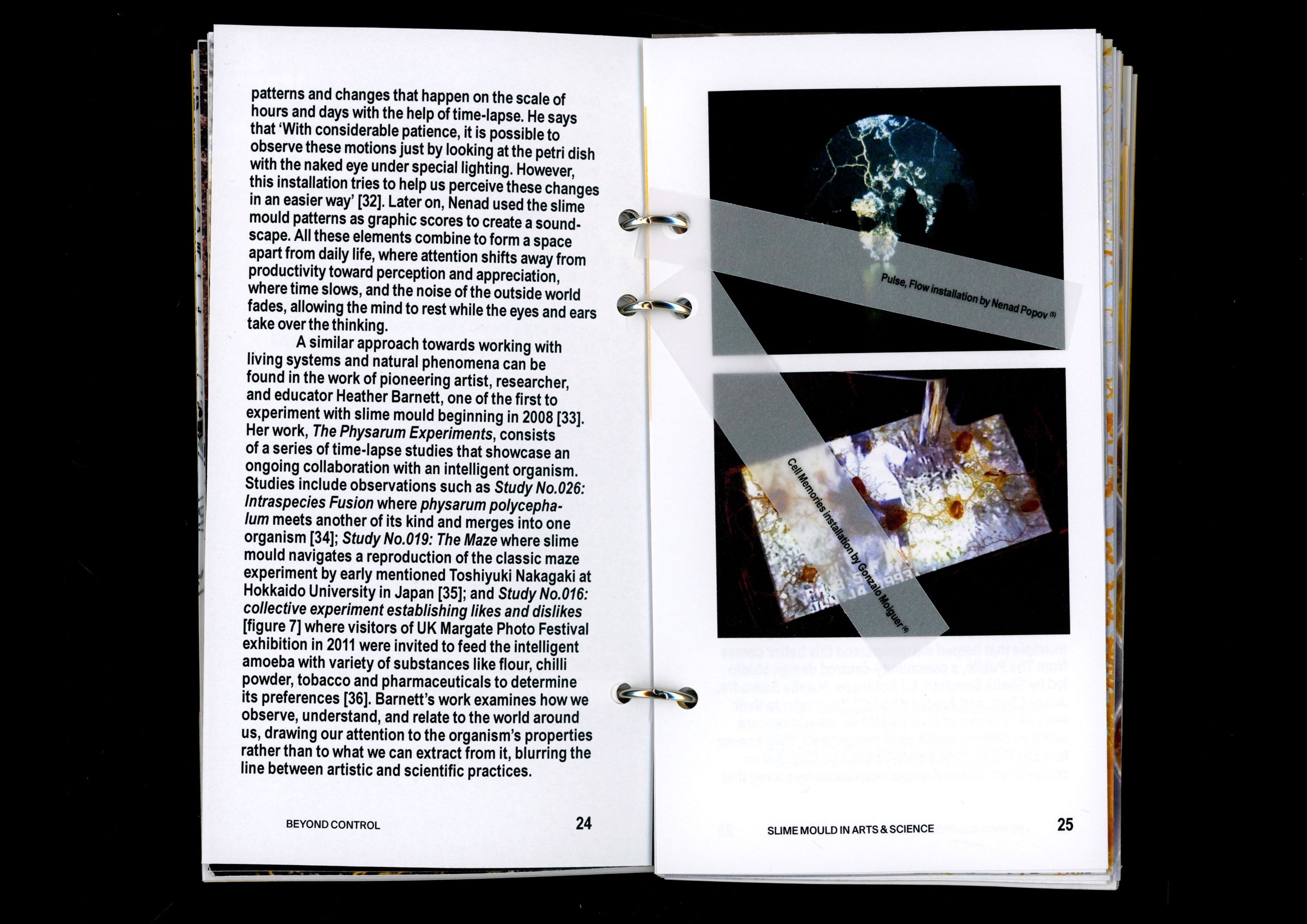
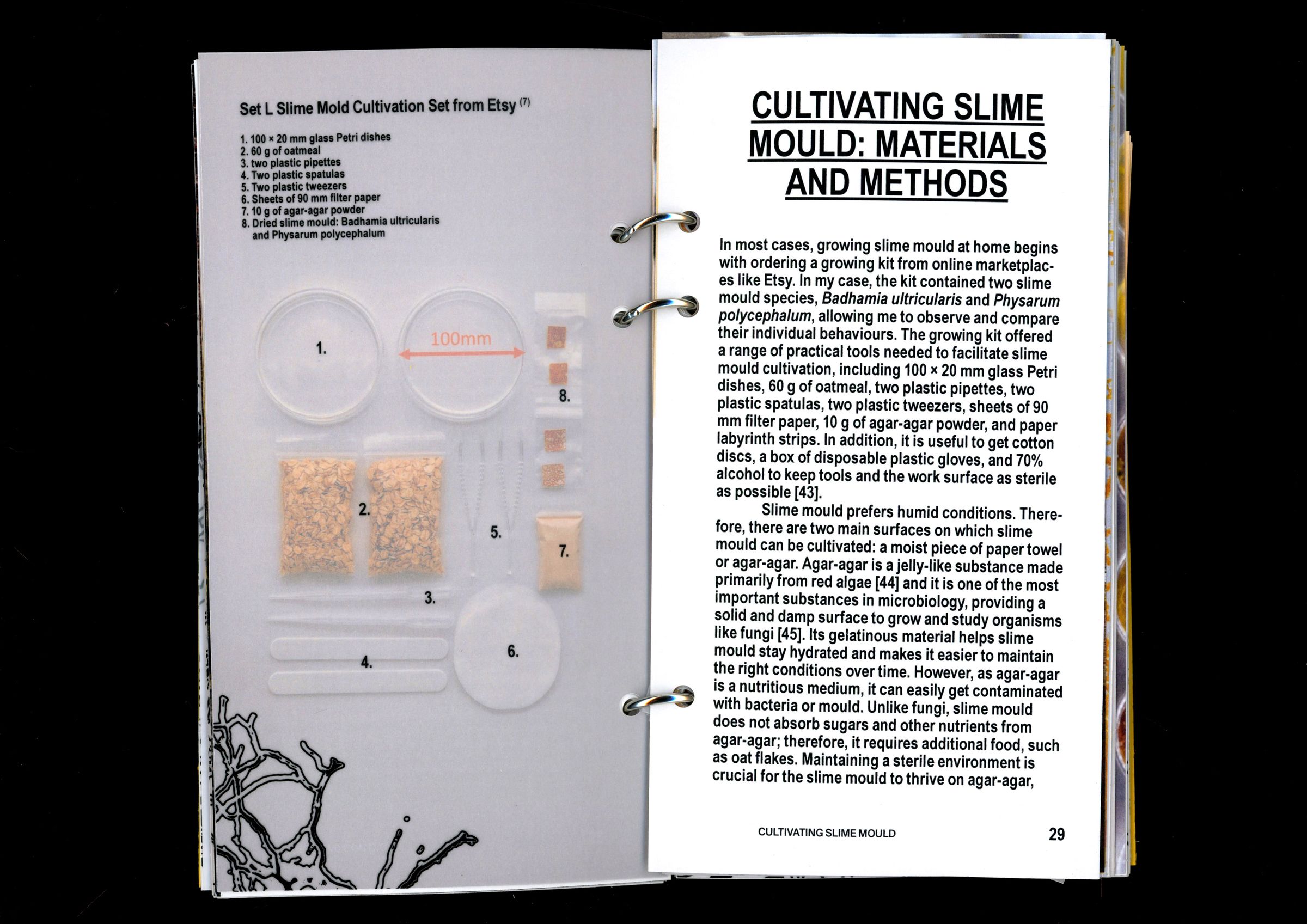
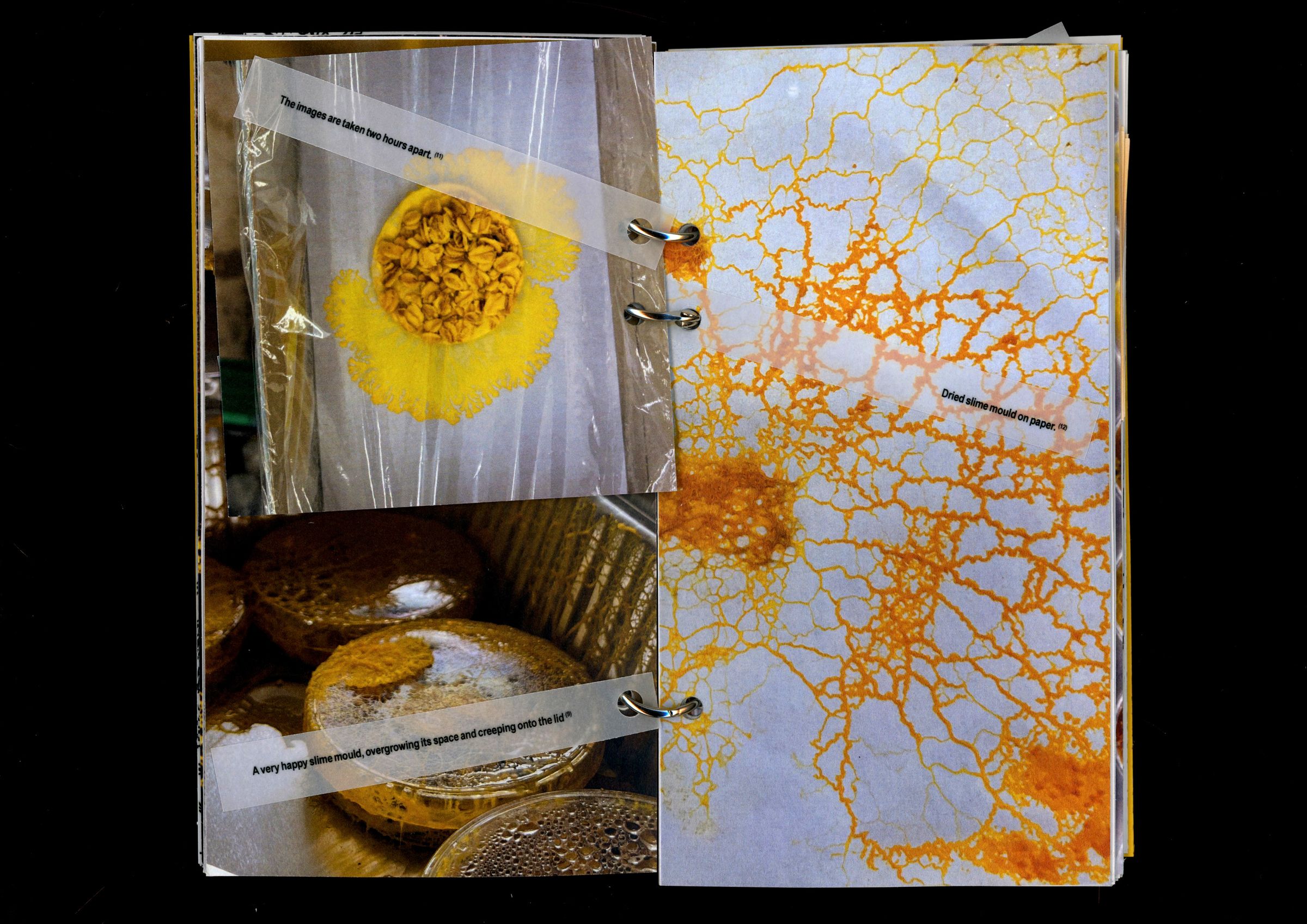
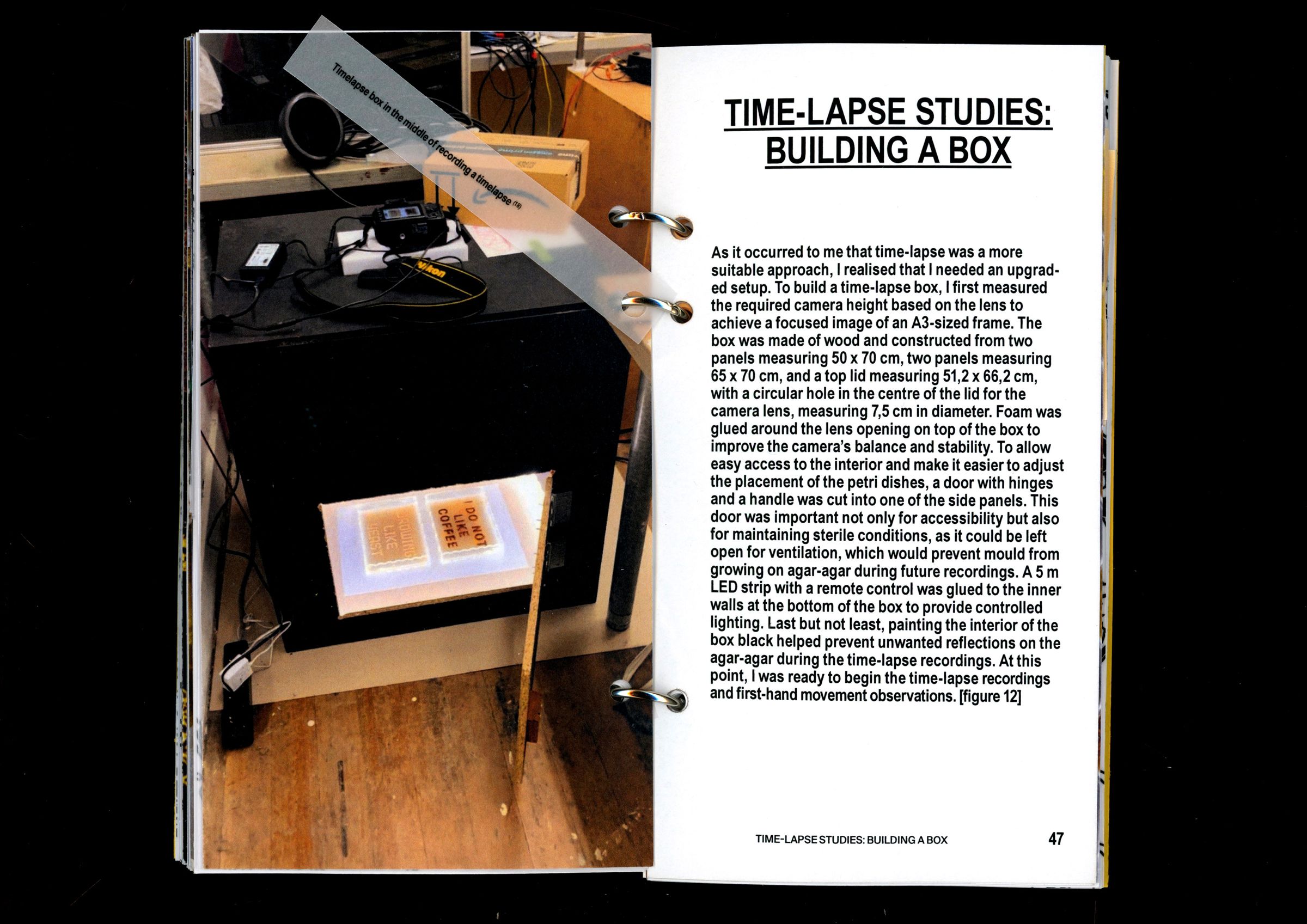
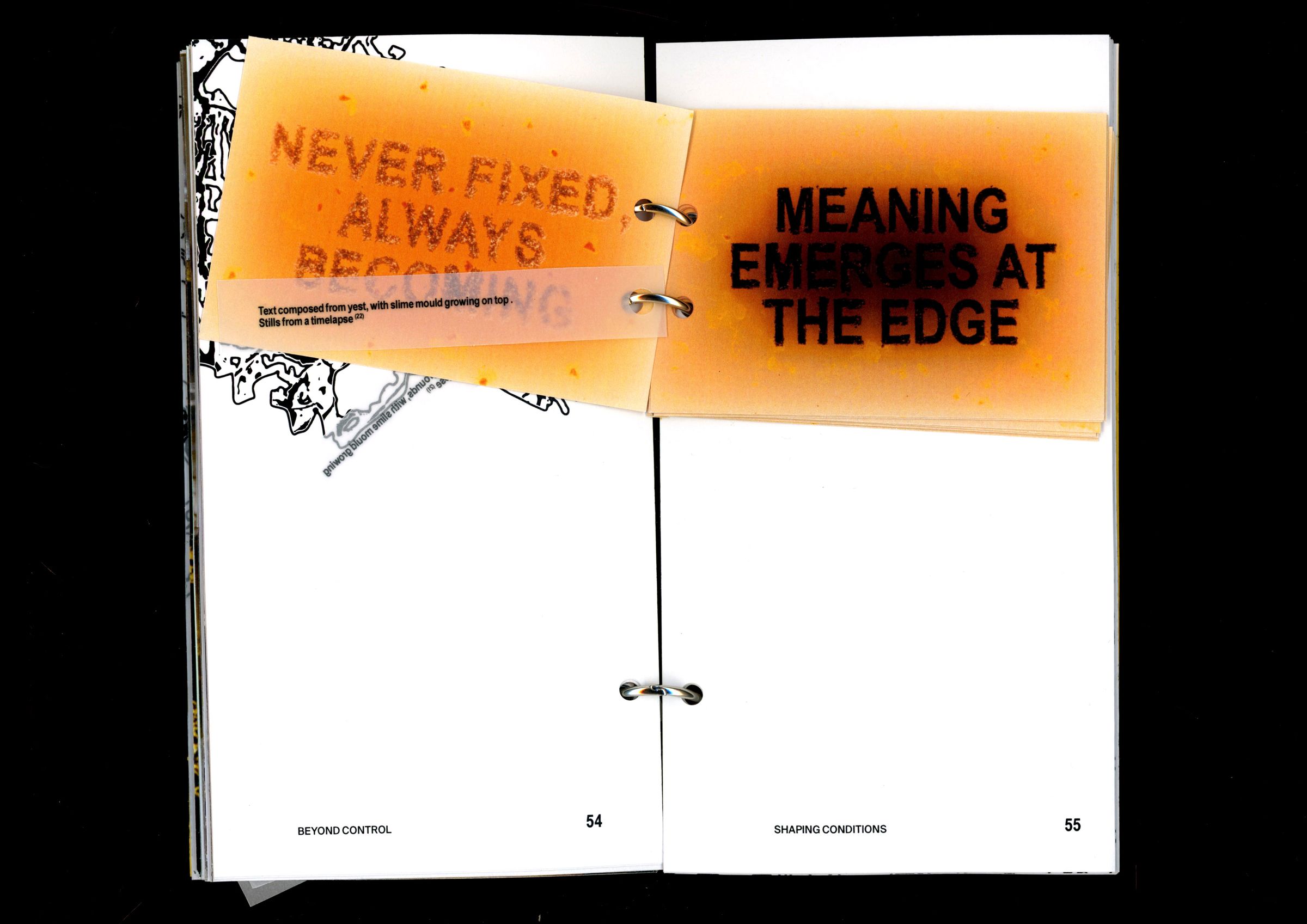
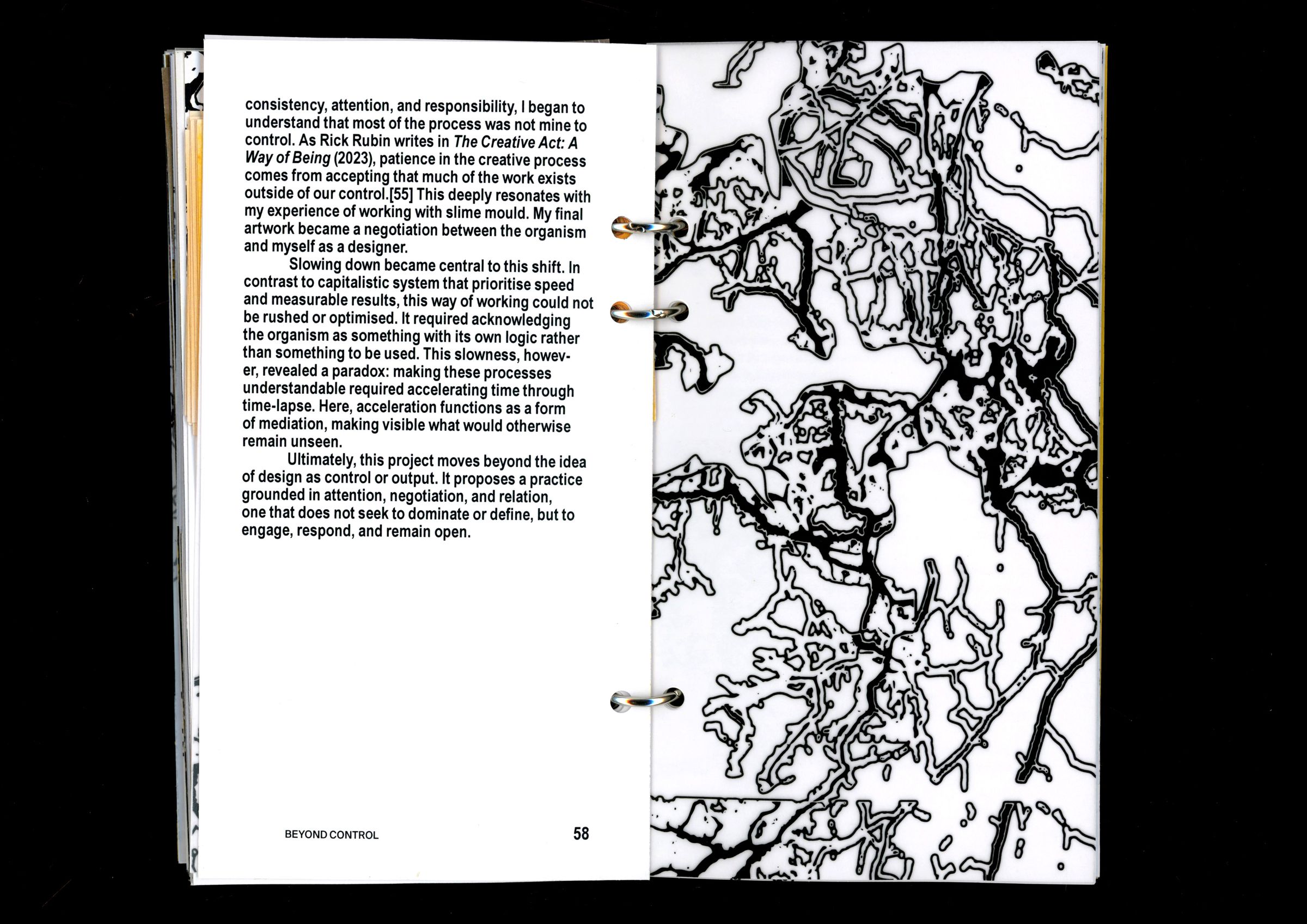
The work asks how design can move beyond speed, efficiency, and control toward a more relational practice. Inspired by fungal thinking and more-than-human perspectives, the project works with the living organism Physarum polycephalum (slime mould) as a collaborator rather than a tool. Through daily cultivation, food-based experiments, and time-lapse recording, it observes how the organism moves and responds, allowing its behaviour to guide the outcome rather than imposing a predetermined result. Grounded in a critique of capitalist design, the project reframes design as a practice of attention, care, and coexistence with non-human forms of intelligence.
Client: MO Museum Curator: Michal Novotný Co-curator: Marius Armonas Coordinator: Dovilė Barcytė Architect: Gabrielė Černiavskaja Producing architect: Dominykas Šavelis Photography: Elena Krukonytė
© delab creative studio Exhibition identity Wall Graphics Exhibition Graphic Design Vilnius, Lithuania 2026
Awards: Young Designer Prize Finalist, Design Research category, Design Innovation Center, Vilnius, Lithuania, 2026 Global Creative Graduate (Shortlisted), Arts Thread, Online (based in the UK), 2026 On shelves: Interspecies Library, New York, US Photobook Distribution, Berlin, DE
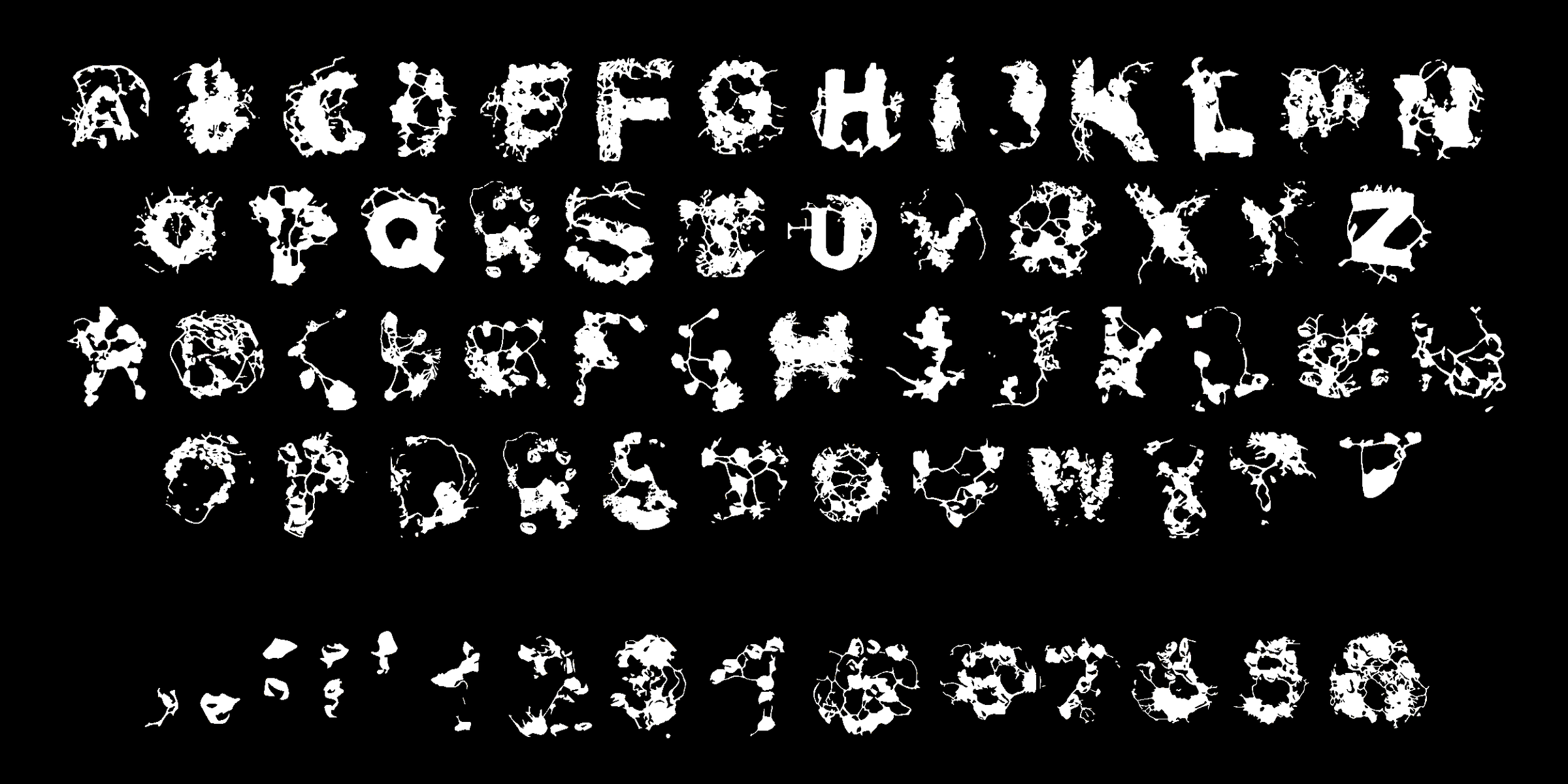
experimental Slime mould typography
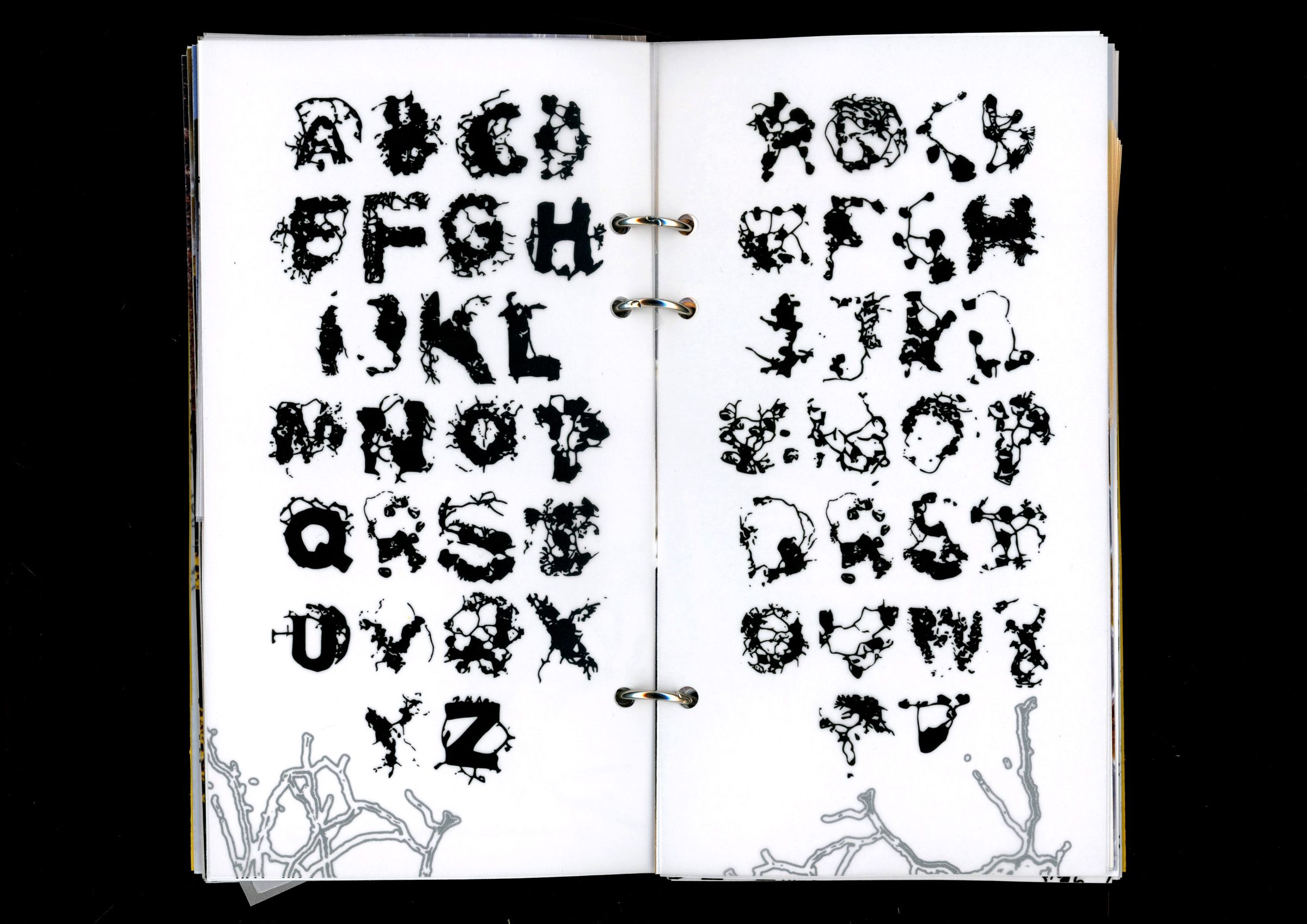
What happens when you let a living organism design type?
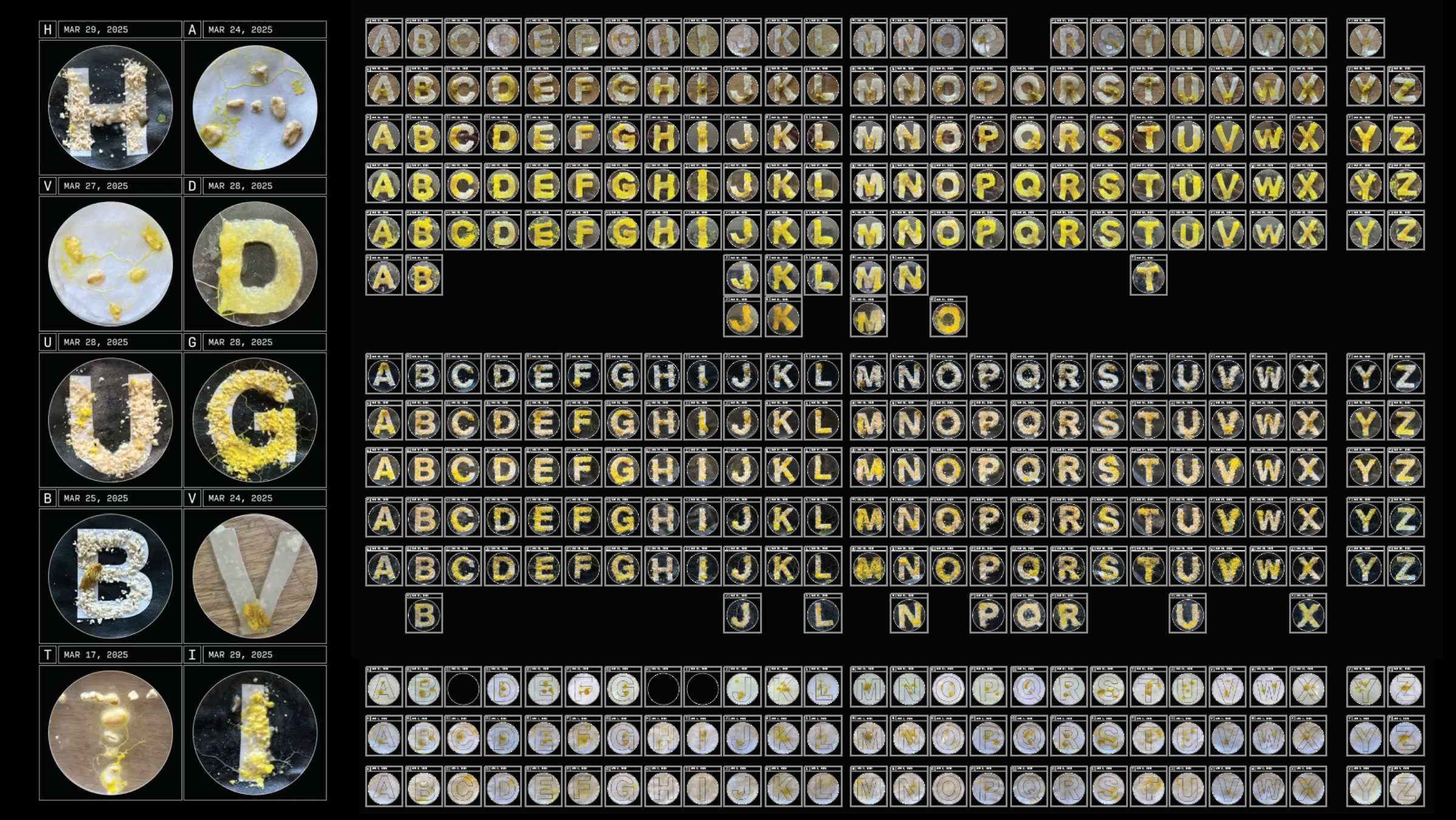
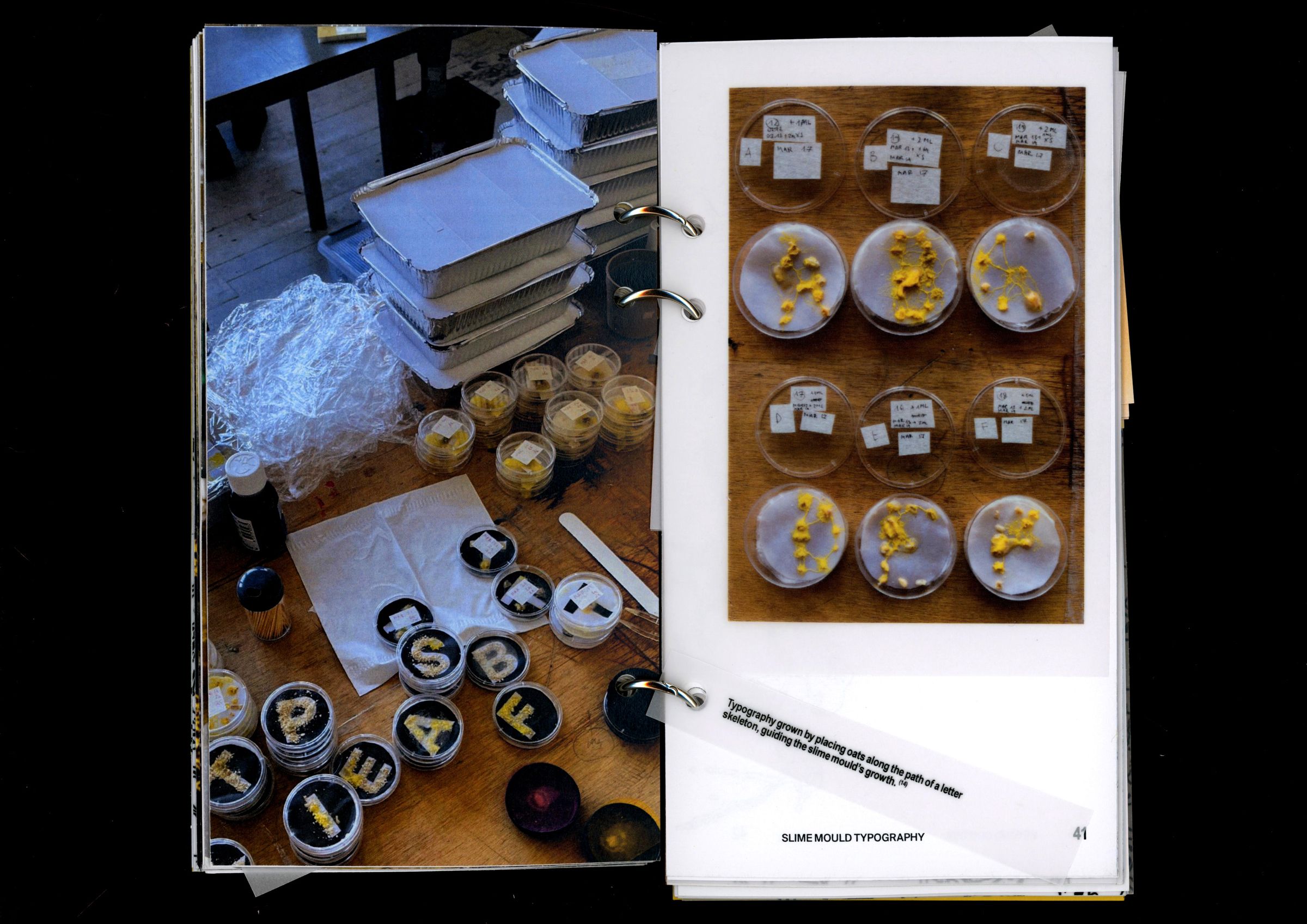
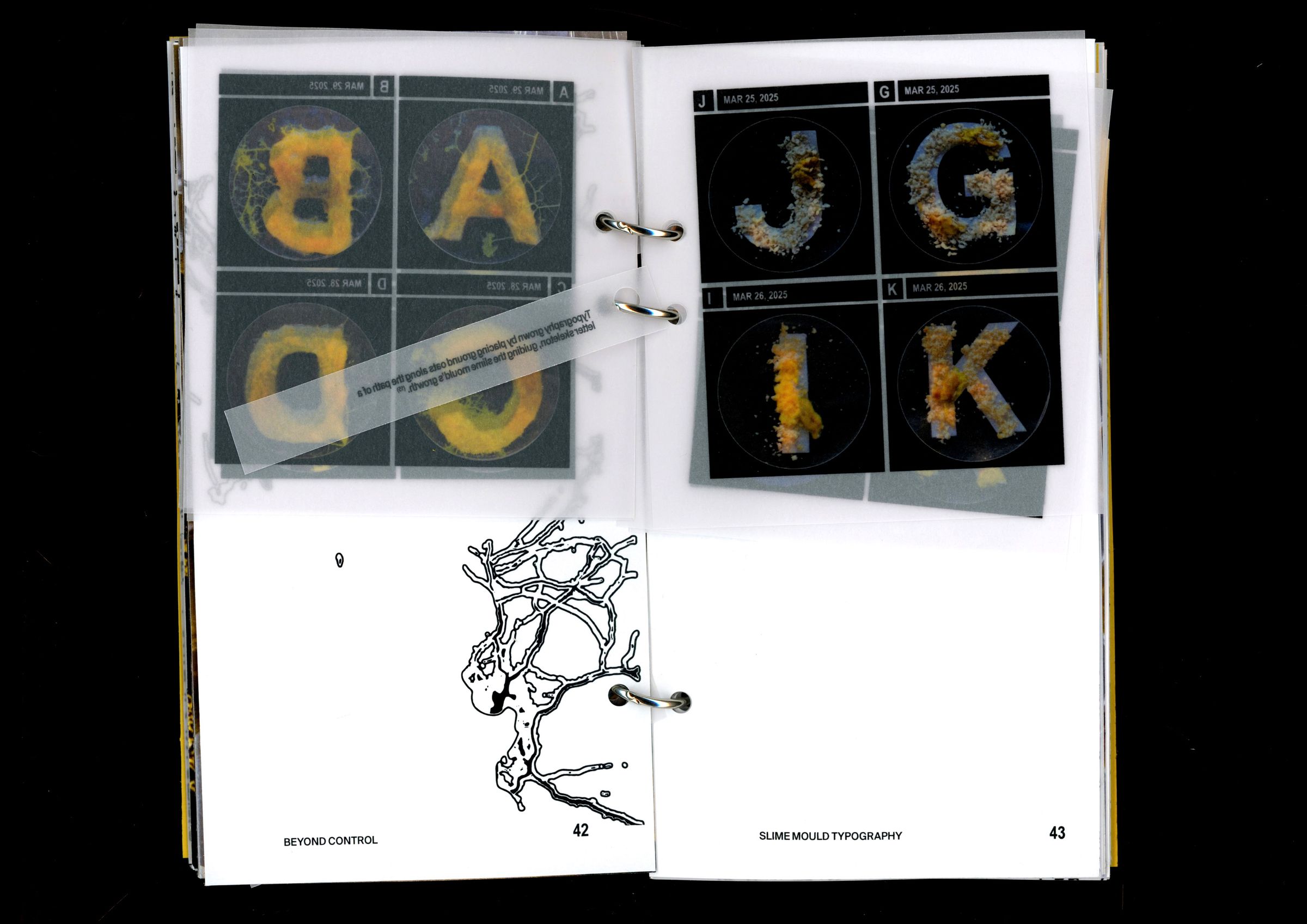
This typeface is the result of half a year spent getting to know slime mould. Each letter was grown in a Petri dish, using oats placed in letter shapes as food. Over one month, I took more than 600 photos and selected the most legible moment of each letter to build the type.
I expected the organism to simply follow the oats path, but it became a negotiation between my guidance and its own will. The results were never fully predictable. The typeface plays with that tension between legibility and chaos, system and organism, presenting the letters not as polished forms but as living experiments.